California boasts nine national parks, more than any other state. And we were able to check another one off our list on our recent trip to California when we took the Island Packers cruise out of Ventura for a day on Santa Cruz Island in Channel Islands National Park.
Channel Islands was our sixth national park in California, with Death Valley, Lassen Volcanic and Redwoods remaining on the list. We did Yosemite, Kings Canyon / Sequoia, and Pinnacles on our honeymoon five years ago, and drove through Joshua Tree as part of a work trip to San Diego a few years later.
When we were planning the trip we had some flexibility in our schedule so we waited a touch longer to book the boat then we should have and when we finally locked it down some of the early/late departures to/from the island had already been sold out. Looking back on it though, we had a great time and our activities “fit” the time perfectly so we weren’t the least bit upset that we didn’t maximize the potential time on the island by booking earlier.
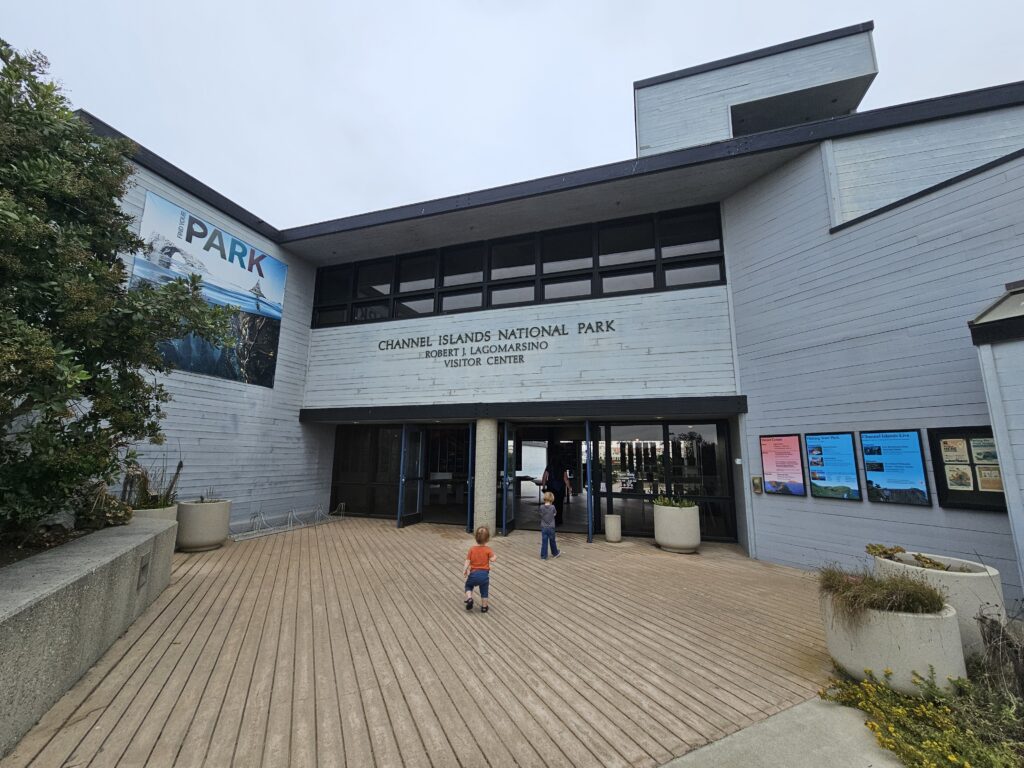
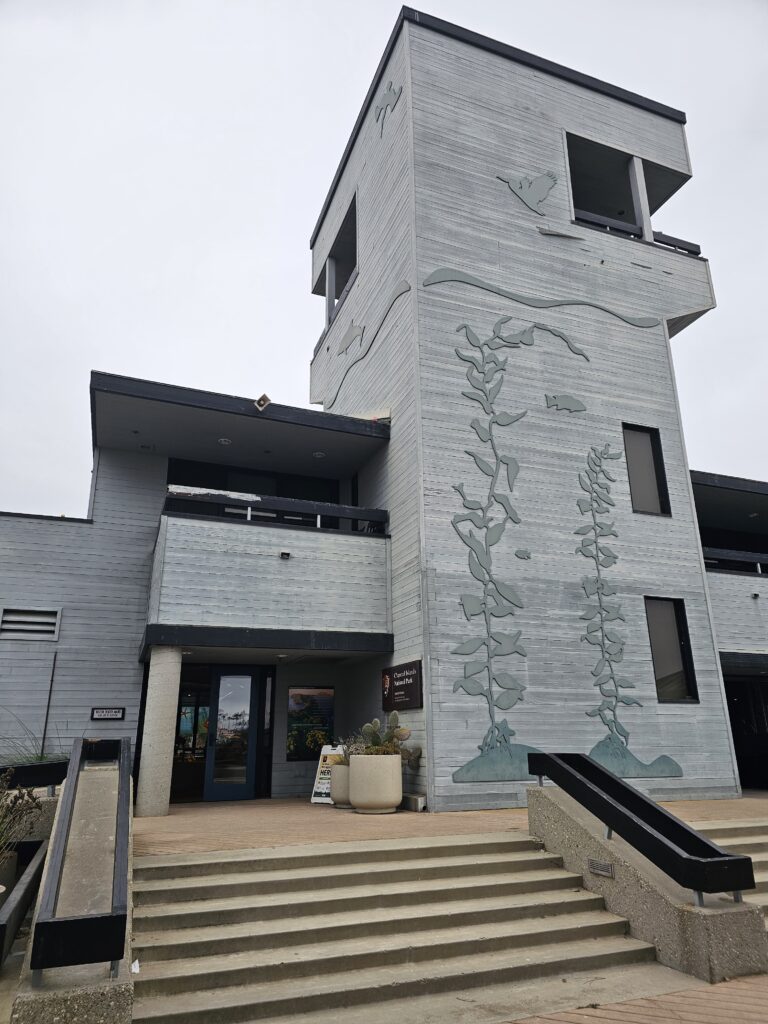
We didn’t quite make it into Ventura the night before in time to go to the visitor center so we had to rely on the short time between the opening of the Channel Islands Visitor Center at 8:30 in the morning and our scheduled arrival at 9 AM in the morning for the 10 AM boat departure to Santa Cruz Island.
Our destination on Santa Cruz Island was Scorpion Cove / Scorpion Anchorage, which is the location of Scorpion Beach, the Scorpion Ranch Visitor Center and the established campground for Santa Cruz in Scorpion Canyon. It took a little over an hour to get there by boat. The ocean was a little rocky and it was basically futile to try to walk around with the 2 hot coffees that they sold us at the cafe. On the way back we ended up giving up on the open containers for closed soda to be opened at our seats! I managed to avoid seasickness but it was a challenge – this was definitely not a smooth ride out there.
Once we got to the cove the weather was beautiful and the sun beaming down to warm us, so no issues there. After listening to the ranger talk / orientation at the end of the dock, we explored the old farm equipment, stopped at the visitor center, and hit the bathrooms.
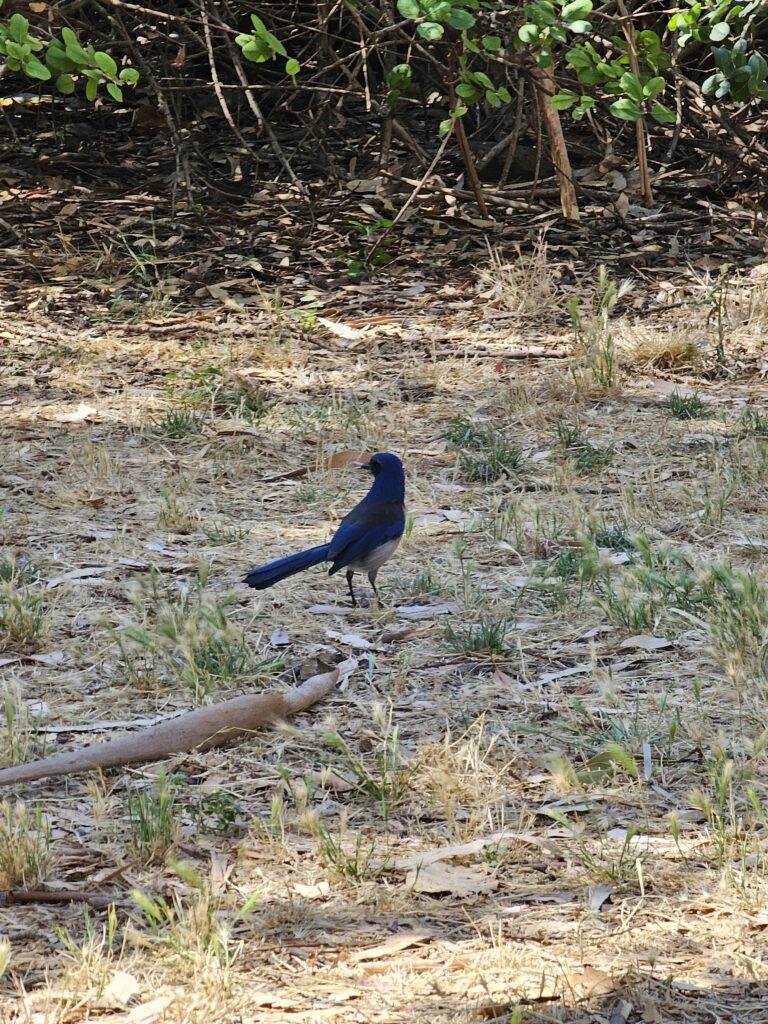
One of the reasons that we were very excited to go on the trip was the chance to see the island fox and scrub jay. The animals on Channel Islands have grown separately from the mainland US creatures for so long that many have been classified as their own species. The Island Scrub Jay is considered one of North America’s rarest birds because they only exist on Santa Cruz Island. So of course we really wanted to see it.
There are a few other scrub jays in North America, and we have already seen the other two in our adventures. The first we found while hiking in Canaveral National Seashore, which is also a pretty rare bird. They live only in Florida, where they are pretty sedentary and live in short scrubby oaks on sandy soil. As it was described to us at that time, their habitat is dwindling in Florida and they are classified as threatened. We went on a hike where we were chased by mosquitos to see them, and weren’t able to positively identify one with the naked eye while we were there – only later did we examine the photos to find that we had captured a photo of one far away and high up in a tree. We sighted the California Scrub Jay in Pinnacles National Park – it was much easier and landed in a tree near us to pose for a photo as we finished up our short hike there. No crazy telephoto lens required for that identification.
So when we signed up for the trip the materials made it seem like we would be lucky to see the fox and the scrub jay. But the reality was different – there were three foxes waiting inside the fenced area outside the ranger’s house, and a group of people standing about pointing cameras made it clear that there was something unique to see there. The Island Scrub Jay took a few more minutes but were plentiful in the campground area as we filled up our water bottles. We saw both within thirty minutes of our ranger orientation on the boat dock.
We ended up doing the Cavern Point Trail in a clockwise direction leaving from the Lower Scorpion Campground and working our way up the canyon before reaching the cliff and eating our lunch at a viewing area with benches just below Cavern Point. We took this direction on the loop trail because the NPS materials suggested it was somewhat easier then doing the loop in a counterclockwise direction. We have two small kids and I am no spring chicken, and the hike ended up being a perfect way for us to spend our time on the island. It ends up being a two mile loop where we took lots of breaks and loved the scenery.
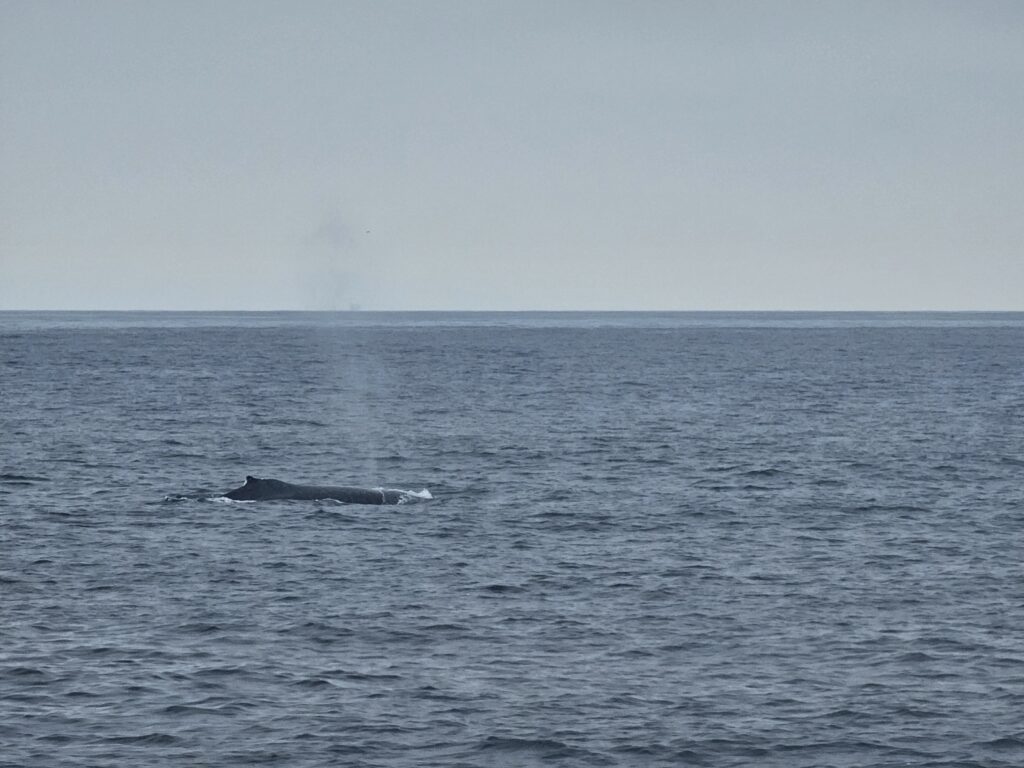
As we were walking back from Cavern Point we started to see an unmistakable sight in the distance – whale spouts. We have no idea how many there were but it seemed like a group of them travelling off the island. We pointed them off to almost everyone we encountered and they were all super happy to see them. We had a great time watching them over our shoulder and whenever we rested.
When we got back we had about 20 minutes to relax and use the restrooms before we got in line for the boat home. On the way back we met a very nice family from Alaska who had a son with the same name as our son (just a little older though) and we chatted with them to pass the time and shared our crayons with them. There was a brief break in the trip to follow a mother and calf whale who were traveling, but they eventually decided that they weren’t interested in moving with the boat and disappeared.
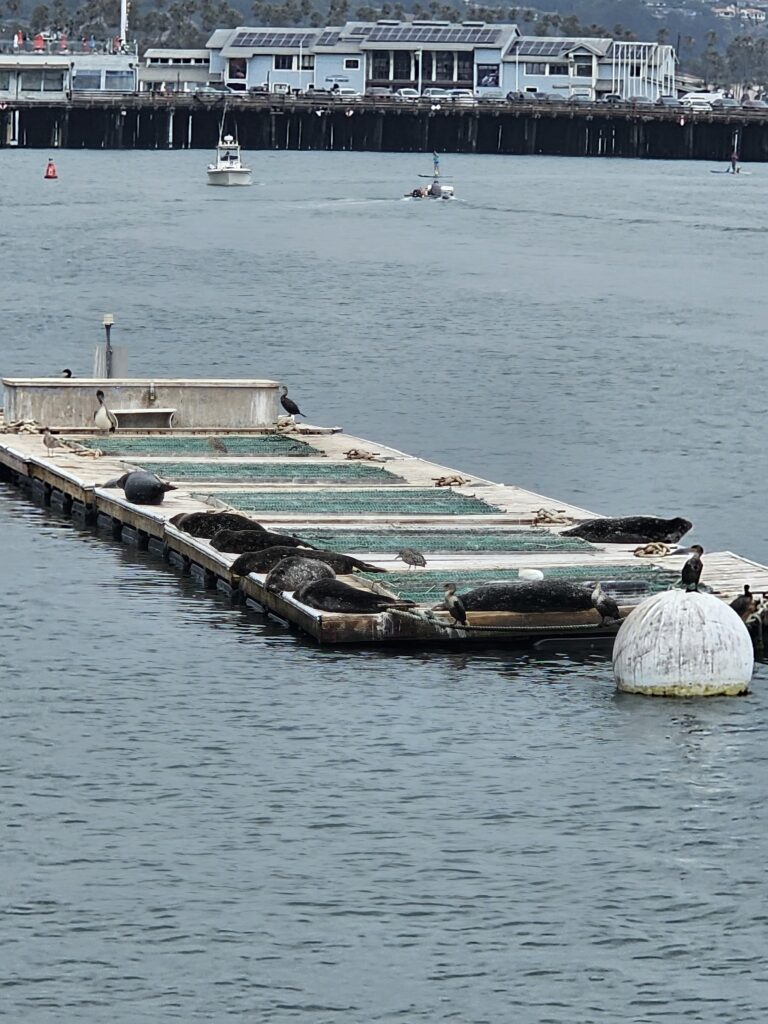
When we got back to the dock the visitor center was closed and we hustled up the coast to Santa Barbara for our hotel so that we could take a whale watching boat with Condor Express. It turned out that it was move-in weekend for UC Santa Barbara, so most of the hotels in the area were packed with parents moving their kids in that weekend. But we were able to find one thanks to Priceline which wasn’t going to charge us an arm and a leg (just one arm). It was a 3 minute drive from the waterfront to the marina. They asked us to get their an hour before the boat was to depart, but that really just led to a lot of time standing around and waiting as the check-in procedure was very quick.
We were pretty excited about the possibility of seeing whales close up, as we had seen a number of whales expelling air from their blowholes in the distance from Santa Cruz Island the day before. From our online research September seemed to be at the end of the whale watching season for the area (north of LA), so before the prior day’s activities it had seemed much more uncertain whether any would be seen. The Condor Express offers a marine life guarantee (if the boat sees nothing you can request another trip), but we had no idea when we would be back in the LA area to take advantage of that promise.
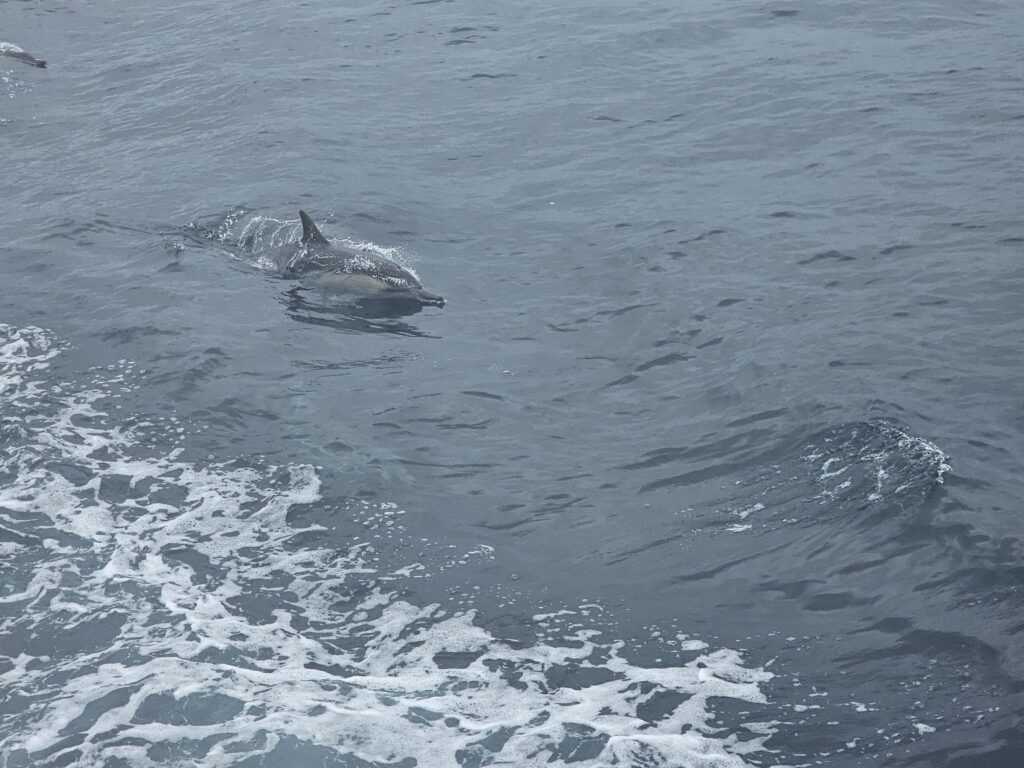
When the boat started loading, we headed up to the second floor to find a row of seats in the open air seating. We ended up making friends with the people around us on the way out as it was a pretty chatty group of passengers, until we came upon the first pod of dolphins. Jayne and I have watched dolphins follow a boat before in South Carolina (and perhaps some other places), but this was an entirely different experience with what felt like easily more than 100 dolphins around us.
One of the first notable things that we saw in the water was an experimental aquaculture test – the company was growing a kelp forest floating in the ocean. I did a report on aquaculture in school, and have followed it from time to time since, so I recognized it pretty quickly.
As we continued to make our way out into the channel, the crew spotted the first whale in the distance and everyone got in position to check it out. It was very exciting but I can tell you now form experience that photographing whales is very difficult!
Whales are mammals and need to surface to breathe and take in oxygen. But unlike humans they can hold their breath for much longer. Most whales can hold their breath for thirty minutes or more if they need to do so, so you never really know when they are going to reappear from below the surface of the water. We were fortunate to be among whales that were traveling, so they are taking breaths more frequently. People would call out and point where the whale had surfaced.
We ended up seeing five whales on the way out to the Channel Islands (including a mother and calf who were very curious about the boat) and an uncountable amount of pelicans and dolphins. At one point we witnessed what they called a birdnado – a large gathering of birds on or near the surface of the water eating the baitfish that were being herded by the dolphins and whales. A humpback whale eats up to 3,000 pounds of food per day so there must have been a lot of chowing down happening under the surface too.
The last birdnado I saw, but didn’t have a name for at the time, was near Melbourne Florida on the Indian river. We were sitting on a dock outside of our Airbnb watching the fishing boats and the fishing osprey, when we started to see a group of pelicans and cormorants gather in the distance along the shoreline. There were easily more than 100 cormorants traveling together and we weren’t quite sure what was happening until they got closer to us. The dolphins were driving baitfish against the shore and when the trapped baitfish got against the shore there was a massive flurry of activity from the birds! Since we had been photographing the osprey already, and the birds came pretty close to the dock since that is where the fish were, I ended up getting one of the best nature shots I have ever taken in that moment. My mom and I still talk about that day from time to time.
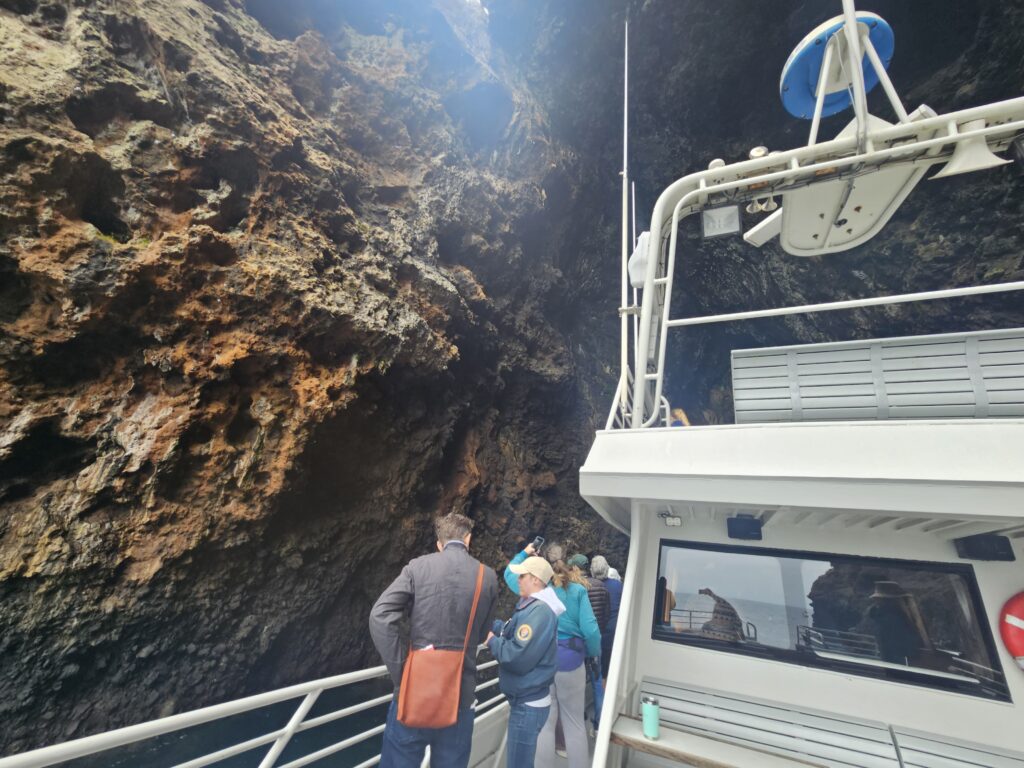
When we got close to Santa Cruz Island the captain announced that we were going to go visit the Painted Cave on Santa Cruz Island, which ended up being pretty cool to check out. This sea cave is the second largest in the United States and the entire boat could almost go right up in the entrance it was so big. It also emphasized to me just how big the island was since it was pretty far from where we were the day before on
We travelled along the coast for a bit and then headed back to Santa Barbara. The trip back was rather uneventful in terms of wildlife spotting but we were able to get a seat out of the wind and eat the lunch that we packed. The skies were cloud covered so it was not as warm as it had been during the past two days when we basically basked in the sun’s warm glare during the daylight hours.
That evening we drove down to the LA convention center to check into the hotel where we would be staying for my work conference, marking the end of the national park adventure this trip. The family was still able to enjoy some other sightseeing, but we all ended up catching the bug that was going around over the course of the last few days and so they ended up staying nearer to the hotel then they might have done otherwise.