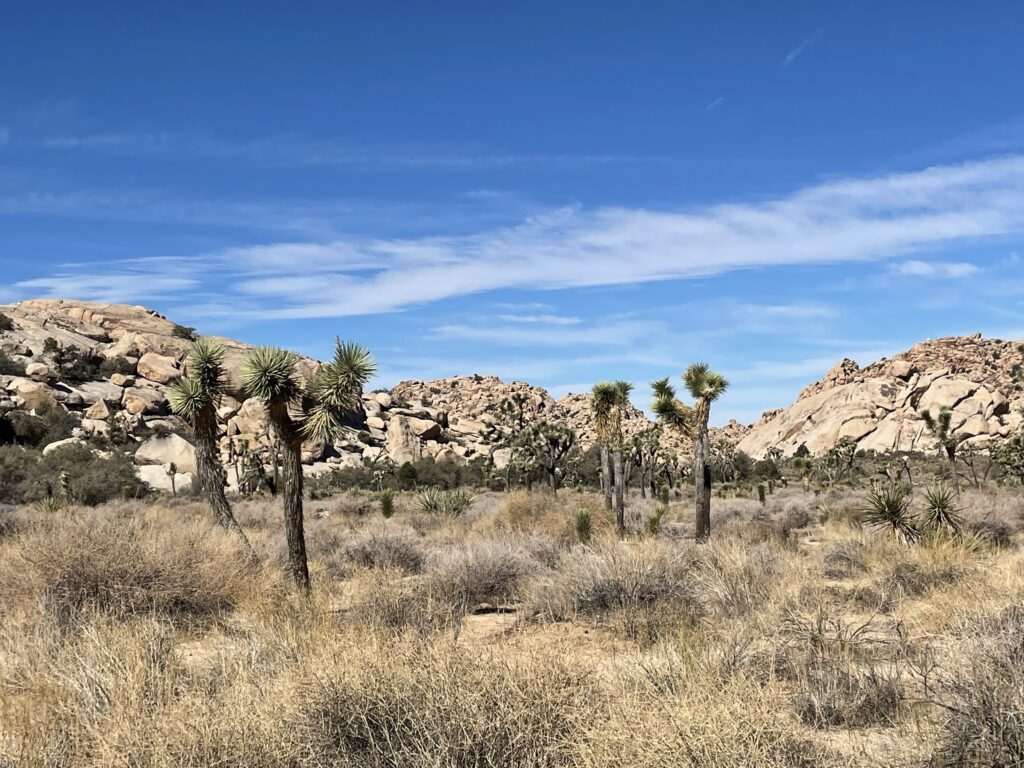
My conference for work ended Friday afternoon and we picked up a car at the San Diego airport to drive out to Joshua Tree National Park. Joshua Tree was the 10th most visited national park in 2020 with more than 2.4 million visitors. On the list of the top 10 national parks, it is one of three that we still needed to cross off our list. There are currently nine California national parks and our visit to Joshua Tree made it our fifth on the list we have visited. We still have Redlands, Lassen Volcanic, Death Valley and Channel Islands to complete the list, as we did Yosemite, Kings Canyon, Sequoia and Pinnacles on a previous trip in June 2019.
Joshua Tree was designated as a national park in 1994 after it was originally declared a national monument in 1936. The park is named after the Joshua tree which grows in the Mojave Desert. The park also protects part of the Colorado Desert and the Little San Bernardino Mountains. The park sits west of Los Angeles and north of I-10 highway running between LA and Phoenix.
By the time we got out of San Diego, the Friday evening drive from San Diego to the Twentynine Palm Springs Highway (via I-15 and I-10) was mostly in darkness. We stopped for coffee and takeout tacos along the way, and then pulled in for the night at Travelodge Inn & Suites by Wyndham Yucca Valley/Joshua Tree. The Travelodge was about thirty minutes away from the West Entrance to the park by car.
With only one day to cover Joshua Tree on our schedule, we entered through the West Entrance and went east on Park Blvd before deciding to turn north to the Twentynine Palms entrance. After a pit stop at the Oasis of Mara, we re-entered the park and went south to the Cottonwood Visitor Center and I-10. We spent roughly eight hours in Joshua Tree.
Before we entered the park, we thought that we would stop at the Crossroads Cafe to grab some breakfast and lunch. But their website said that they were not fulfilling takeout orders at the time so we proceeded directly to the visitor center for its passport stamp and bathrooms. While we were there we found the Roadrunner Grab+Go and picked up sandwiches for breakfast and lunch.
The highlights of our day were:
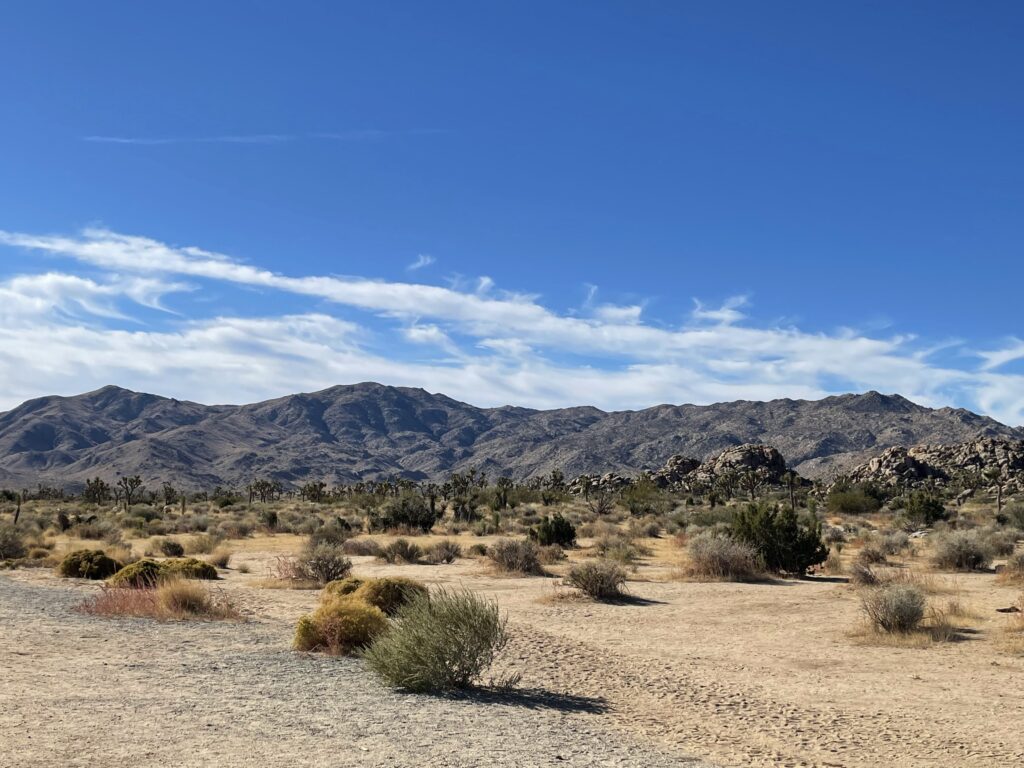
Barker Dam – This was our first hike in the park after entering at the West Entrance Station and is known for its bird sightings. However, there was limited bird activity here, probably due to a combination of the hot day and the dry lake. We still enjoyed our 1.5 mile loop hike through the desert, boulders and Joshua trees of the area.
Keys View – This is a panoramic view that looks over Coachella Valley and the Salton Sea reached by a spur road traveling south from the Cap Rock area. The 20 minute drive south on Keys View Road brings you to a parking area at the crest of the Little San Bernardino Mountains. We recommend this destination for everyone visiting Joshua Tree National Park. As we were leaving Keys View, we saw a Gambel’s Quail cross the road in front of our car.
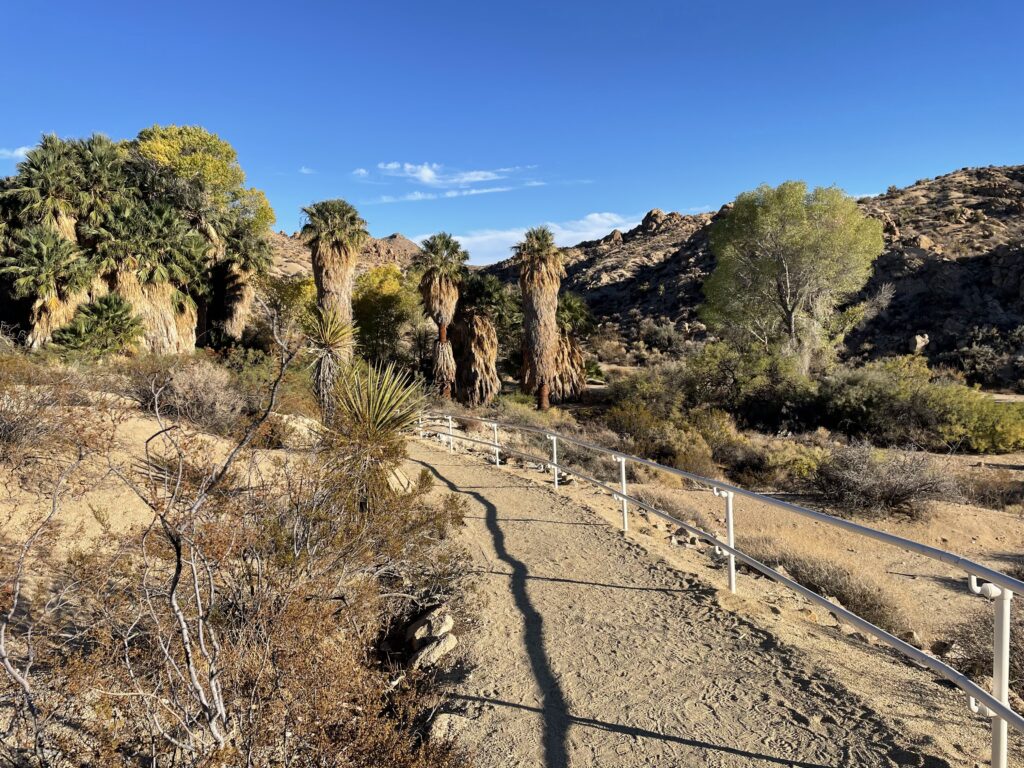
Oasis of Mara – We stopped at the visitor center here and decided to do the loop hike across the property. We enjoyed the birding and read the historical story on the markers along the trail (even though the story was definitely depressing and I doubt we will read it the next time). Jayne saw her first roadrunner here just behind the visitor center.
Cholla Cactus Garden – This nature walk features the teddybear cholla and in the spring various wildflowers. We did not do the loop through the garden because our son was sleeping in the car, but I enjoyed photographing the shrubby cacti known by the name cholla.
Bajada Nature Trail – This is a short trail and parking area near the southern entrance to the national park. The trail descends from the parking area to an oasis. I managed to see my roadrunner here as it crossed the trail just ahead of me, and also an unidentified bird of prey fly from a tree on the ridge above the trail. We did it at the end of the day and it was much cooler than our mid-morning hike since the sun was lower in the sky.
The three areas and things to do that we will have to do next time are Skull Rock, Arch Rock and night time stargazing. We also didn’t camp in the park so we will have to do that as well.
After our day at Joshua Tree National Park and dinner at La Paloma in Indio, we decided to drive down to the Salton Sea to be closer to Julien for our Sunday full of eating apple pie with friends.
The Salton Sea is a landlocked body of high saline water at one of the lowest spots in North America. It formed when the Colorado River flooded in 1905. The area was once a popular resort destination, but changes in the ecosystem have practically eliminated its draw as a tourism destination and it has instead been described as a “Skeleton-Filled Wasteland”.
We stayed the night in Westmoreland, California, which is about 90 minutes west of Julian, at America’s Best Value Inn. We got a discount through Priceline and upgraded to a room with a jacuzzi.
As we learned about Westmoreland and the Salton Sea, we realized that we were just a few miles away from a major wintering grounds for shorebirds and waterfowl at Sonny Bono Salton Sea National Wildlife Refuge. The NWR is located at the southern end of the Salton Sea. There are two units. One contains the Visitor Center and Rock Hill Trail; the other (Unit 1) contains an observation tower and the Hardenberger trail. It was renamed after Congressman Sonny Bono in 1998.
Since it was October we figured it was still early in the season, but the reports on eBird suggested that we might still have a good day of birding. We were supposed to be in Julian by mid-morning, so we rushed out at dawn to make sure that we had an hour to enjoy the birdwatching. We went to Unit 1, which was closest to our hotel. We figured we had about an hour, and we used every minute off it at the Salton Sea.
The sun was just coming up over the farmland fields to the east as we made our way to the wildlife refuge. Our first sighting as we drove in was a group of sandhill cranes in the fields. We also saw a group of snow geese; nothing compared to what we saw in Middle Creek by our home in Pennsylvania, but a familiar sight nonetheless as they stomped through the fields and made a racket. We also saw a large amount of waterfowl and shorebirds in and around the duck ponds.
We stopped for a while to bask in the morning sun as well as enjoy watching and photographing the birds. You could hear the cocktail party noises of the geese at our first stop. It was a beautiful morning.
It was at the first observation platform that we started to see the birds of prey. An american kestrel sitting on the closest telephone pole and a redtail hawk sitting a few poles away from it. We watched the birds fly in and out for a few minutes and then we set off walking to the other observation deck.
The Salton Sea has been receding and the water was nowhere near the observation decks. But thanks to our superzoom Canon SX60 camera we were able to get a few shots of birds of prey in the distance to identify later. We identified a northern harrier and a peregrine falcon when we reviewed the photos, but they were pretty far from us at the time and weren’t then identifiable by the naked eye.
On the way out back to the hotel we enjoyed watching a beautiful great blue heron along the road in the park. They are a common wading bird that we see in Pennsylvania, but it is pretty rare for us to see one as close as we were able to see it there.
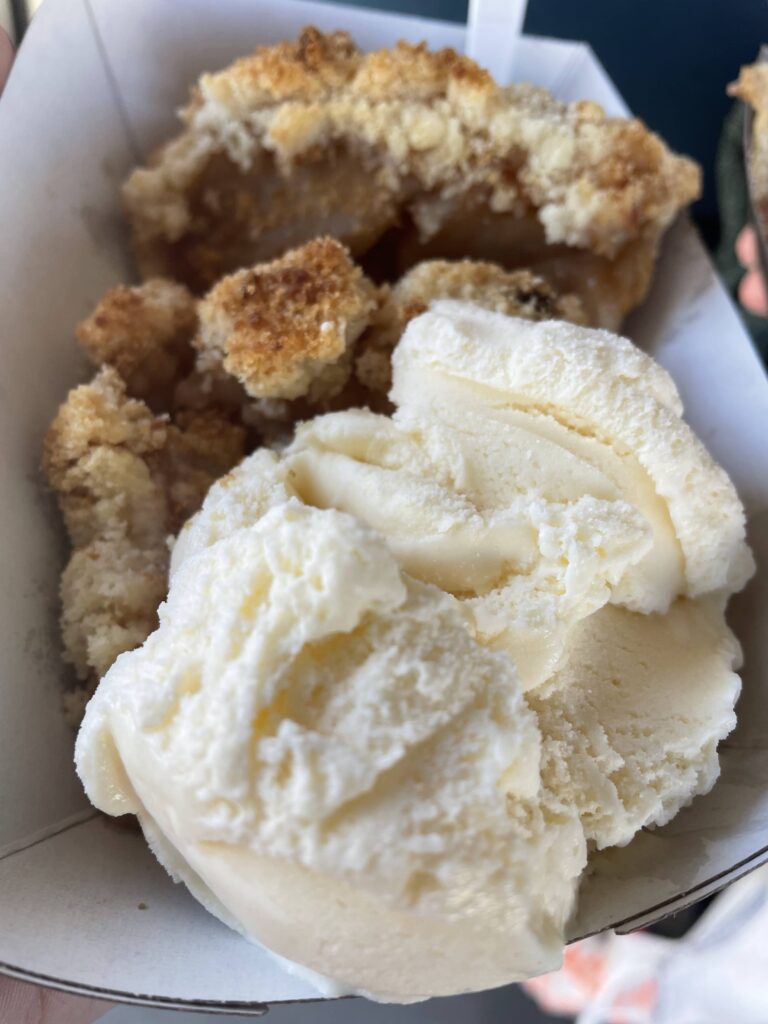
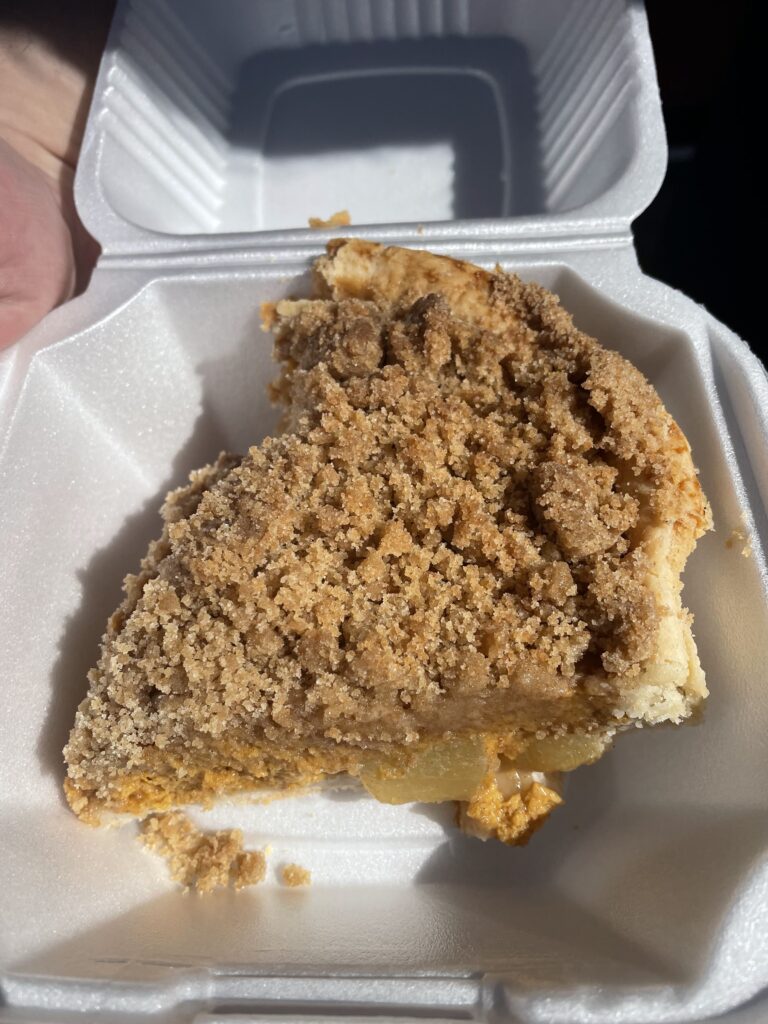
Julian ended up being a welcome change from the desert heat and sun of Joshua Tree. Julian is a mountain retreat and historic gold mining town about one hour east of San Diego. It is also known for its apple orchards and apple pie, which we enjoyed copious amounts of while we were there even though the apple picking was done for the season. We apparently weren’t the only people with the idea to visit Julian for some fall fun on that Sunday – we faced a line at every establishment we tried for apple pie. With a redeye flight set to leave from San Diego International Airport, we departed town in the early afternoon to get back to the area. We were hopeful that we wouldn’t have traffic and would have time to visit Cabrillo National Monument, which we did.
Cabrillo National Monument commemorates the exploration of the West Coast by Juan Rodriguez Cabrillo, who was the first European to set foot on the West Coast of the United States (before the United States even existed). It contains a monument to Cabrillo, Old Point Loma Lighthouse, and tidal pools.
The national monument is reached by entering into Naval Base Point Loma, which has for the past few years closed the gates to entry/exit at 5 PM. The tidal pool area closes at 430 PM, so we were on a real race to get there with enough time to enjoy it. When we arrived, it was high tide so there was a pretty limited area to visit safely. Nevertheless, a kind park volunteer was showing people different features of the tidal pools and life that remained visible along the shore. This was the first time that our son put his feet in the Pacific Ocean, and our first time in the Pacific Ocean since 2019, so we executed our tradition of capturing a photo of our feet together in the water.
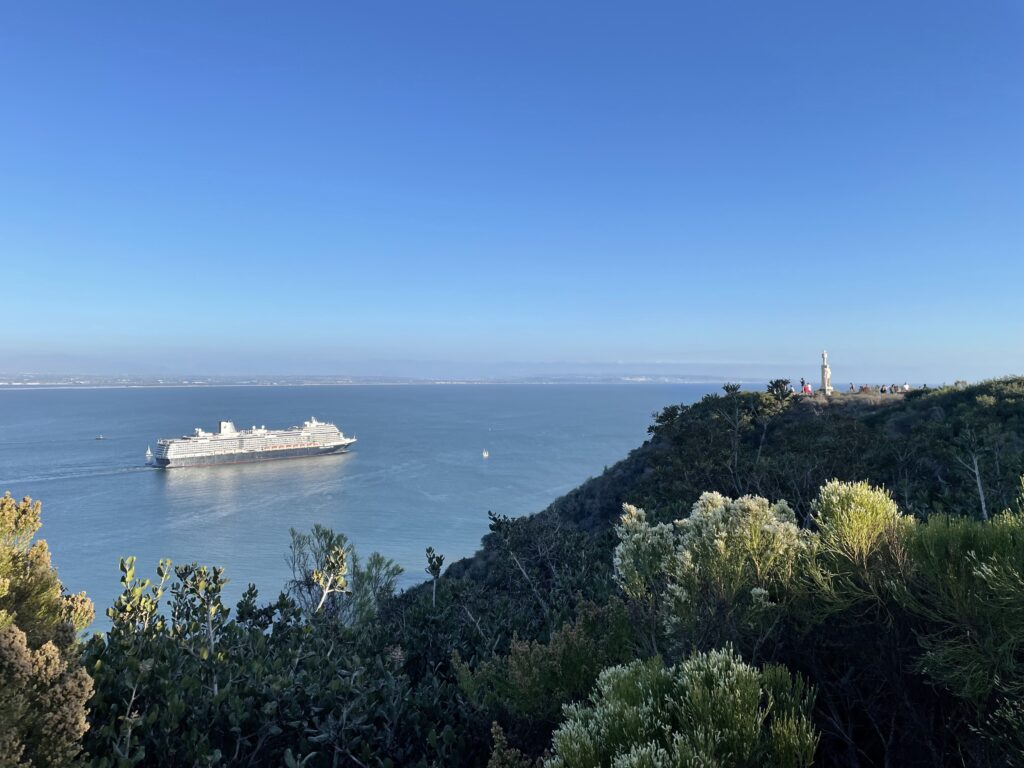
We then raced up the road and around to the visitor center for our remaining few minutes, where we stamped our passport, enjoyed the views of the bay, and admired the Cabrillo statute and old lighthouse.